


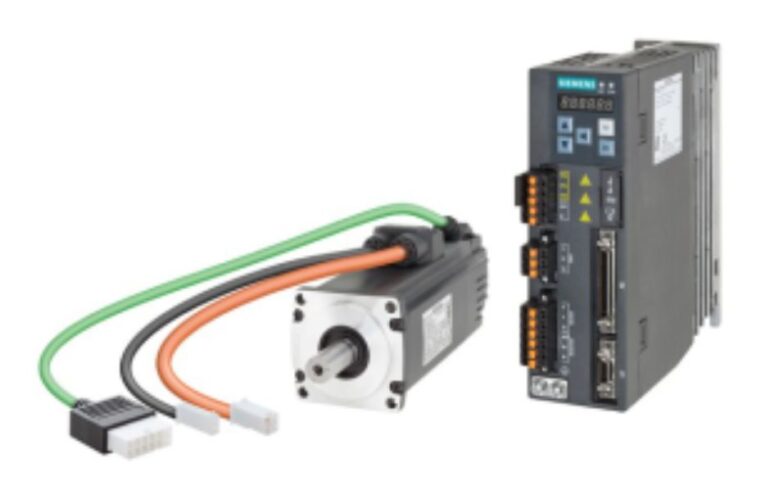
In today’s world, where machinery is required to work at high speeds with complete accuracy and zero errors, the motion control has gained prime significance. Be it a robot assembling tiny components, a CNC machine cutting metal with extreme accuracy, or an automated packaging line working non-stop, smooth motion is what plays a major role. It is now that the AC Servo Motor Control System turns out to be a true hero.
A servo drive looks simple from the outside; internally, it works out its magic. The servo drive takes an input command, processes it, amplifies it, and sends just the right amount of power to the servo motor. Thanks to this perfect teamwork by the servo drive and the motor, the entire machine moves with accuracy at speed and in complete control.
What is an AC Servo Motor Control System?
An AC servo motor control system is an advanced form of motion control system that furnishes the means for managing, operating, and observing AC servo motors. This system generally consists of three major components:
Servo Motor: This is a motor that performs the actual movement.
Servo Drive: This is an intelligent controller that processes the command and provides signals to the motor.
Feedback Device (Encoder) – A sensor which constantly informs the drive what the motor is doing.
Taken together, the three constitute a closed-loop system: the motor is constantly reporting its position, speed, and torque back to the drive. If there is even the slightest deviation from the command, it immediately corrects it; that is why the servo motors are so accurate.
How the System Works — The Magic Inside
To comprehend the working of an AC Servo Motor Control System, let us break down the process in easy steps:
1. The order is given
A controller, like a PLC, CNC, or computer sends the servo drive a signal as to what it is to do: move left, move right, rotate, stop, speed up, or slow down.
2. The Servo drive processes it.
The servo drive is like the brain: it reads the command and decides how much power the motor needs to accomplish that.
3. Power is increased.
It takes a small command signal and amplifies it into a strong electrical output in order to drive the motor.
4. The motor shifts
The servo motor rotates or moves exactly as instructed—smoothly and precisely.
5. The feedback is immediate
This means that even slight position or speed offsets of the motor are corrected immediately due to instantaneous feedback between the motor encoder and the drive.
A tight control loop makes these machines act with incredible precision.
Why AC Servo Motor Control Systems appeal to industries
Today’s industries demand speed, quality, and accuracy; an AC Servo Motor Control System plays a major role in the fulfillment of all three. Why?
1. High Precision and Accuracy
In servo systems, minute movements can be realized even to fractions of a millimeter. Since these are the main characteristics, their applications are found in CNC machines, robotics, medical equipment, and automation.
2. Smooth Motion
Among the most significant advantages of direct drive units are smooth, vibration-free movement: the drive continuously adjusts the speed and torque of the motor for natural, controlled motion.
3. High Speed
Such servo motors can run at extremely high speeds with no loss of precision for various applications in high-speed packaging, printing, and even assembly lines.
4. Immediate Response
A servo motor responds to any given change in command virtually instantaneously. It can, therefore, allow the machines to work at much higher speeds while remaining very efficient.
5. Energy efficiency
Only the amount of power needed is utilized by the system. This reduces the cost of electricity bills by helping to avoid overheating.
Common Applications of AC Servo Motor Control Systems
Applications of technology in AC Servo Motor Control Systems can be seen in almost all modern industries. A few of the common examples include:
1. CNC Machinery
Servo systems power ultra-precise cutting and shaping on CNC lathes, mills, and cutters.
2. Robotics
Servo motors control arms, joints, grippers, and rotation in industrial robots with perfect accuracy.
3. Packaging and Labeling Machines
From sealing to labeling, servo systems can make the packaging machines work faster but consistently.
4. Printing machines
Servo accuracy is very important for both proper roll positioning and for accurate print registration.
All these applications show just how widely accepted and trusted the technology of servo control is.
Why do Servo Drives play a key role?
Though the majority of attention is focused on the motor, the real intelligence is in the drive. A servo motor cannot perform accurate actions without a drive.
A good servo drive:
-
- Read command signals
-
- Monitors motor feedback
-
- Manages power
-
- Ensures safety
-
- Provides real-time adjustment to movement
Conclusion
The AC Servo Motor Control System excels as a comprehensive motion control solution that embodies precision, speed, and reliability for making machines come alive-utterly more than just a combination of a motor and drive. Be it robotics, manufacturing, or packaging, servo systems have made modern automation possible. The AC Servo Motor Control System has acquired the status of one of the industrial standards in almost every part of the world due to its smooth movement, high accuracy, and real-time control. As technology moves further, servo systems will continue to form the future of intelligent and automated machines.