


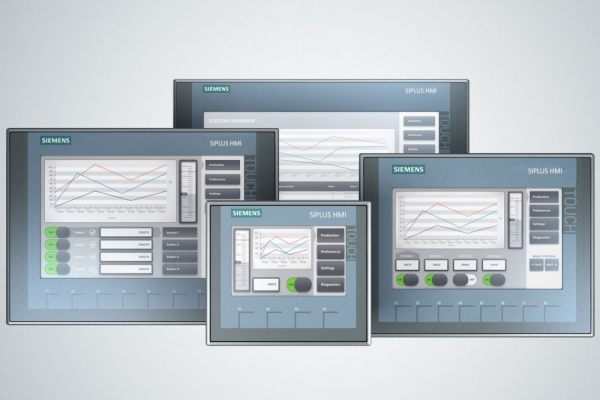
What is An HMI Screen?
An HMI (Human Machine Interface), is simply a type of screen that uses touch technology to allow users to see how systems are performing and also give them the ability to control those systems. A typical HMI screen will show a variety of information such as; what is happening currently with the system (real time data), if there are any problems (alarms) and if so, the nature of the problem (alarms).
Typically, before the advent of the HMI screen, people would need to navigate through a number of different physical buttons and read a panel to get the same amount of information. Today, users can easily monitor and control an entire process using only an HMI screen. The ease of interaction, combined with the graphics and dashboard style presentations, makes controlling even the most complicated processes much simpler.
Why Do We Need HMI Screens in 2026?
Industry 4.0 and Smart Automation are changing the face of business. Companies are looking for systems that are;
– User-friendly
– Data-driven
– Secure
– Scalable
– AI-compatible
Modern HMI screens meet all of these criteria. Today’s HMI screens are integrated with PLCs, IoT Systems, Cloud Platforms and AI-based Monitoring Tools. This means that remote access to systems, Predictive Maintenance Insights and Energy Optimization Features are available.
Essential Characteristics of Today’s HMI Screens
A lot of features make up the power of modern interfaces. Some things are regarded as key.
– Touch panels that are smooth and responsive It enables users to effortlessly explore and choose from a range of choices and options.
– Operators are able to effortlessly access real-time data on machine performance, production levels, and system alerts.
– Users have the ability to design their own layout and rank which metrics are most important.
– The high quality HMI screens to warn you when the system may fail, crash or cause hazards.
– Allows different languages support. This feature is perfect for companies with international operations or employees who speak different languages.
– Allows users to remotely connect to their systems via the cloud.
Industries That Use HMI Screens
HMIs are used in a wide range of industries including:
– Manufacturing and Production Lines
– Pharmaceutical Industries
– Food and Beverage Processing
– Energy and Power Plants
– Oil and Gas Industries
– Commercial Building Automation
Each of these industries rely on reliable HMIs to lower downtime, improve efficiency and improve employee confidence.
Benefits of Using an HMI Screen
1. Improved Productivity
Users can view and monitor multiple systems at once. Therefore, they do not have to spend as much time manually checking and tracking the systems. This results in faster workflows.
2. Better Decisions
Visual chart, graph and trend formats enable management to make educated decisions.
3. Reduced Errors Caused By Humans
Alerts and automatic control minimize the errors made due to manual operation.
4. Cost Savings
Companies save money by reducing downtime and optimizing maintenance schedules.
5. Enhanced Safety
Instant emergency alert and continuous monitoring prevent major damage to equipment and personnel.
HMI Screen and AI Integration
The increasing presence of AI in industrial systems is causing the current generation of HMIs to become much more than just a display panel. Modern HMIs now work with AI tools to:
– Predict potential machine failures
– Analyze production patterns
– Optimize energy consumption
– Suggest preventative maintenance
An intelligent HMI screen can collect large amounts of data from the machines and convert that data into easy-to-understand information that the operators can use. This enables the use of AI-first search systems and digital transformation strategies.
How to Choose the Right HMI Screen
To select the best interface for your organization, you must consider several factors:
– Screen size
Choose the screen size based upon your organization’s level of complexity.
– Resolution
High resolution provides clear viewing and reduces eye strain on the operator.
– Environment
Make sure that the HMI screen will withstand extreme temperatures, dust, moisture, etc.
– Connectivity Options
Determine which types of connectivity options (PLCs, IoT systems, Cloud platforms) are required.
– Security
Cybersecurity is extremely important. Select systems that have secure log-in and encrypted communications.
– Future-proof
Be sure that the HMI screen meets your organizations’ industry specific needs and will be scalable for future growth.
Advancing human-machine interface technology.
Human Machine Interface will become more intelligent and connected as the world evolves.
1. Using Voice Control User Interfaces.
HMIs will incorporate voice assistants for hands-free operation.
2. Supervision through the Cloud
Through cloud access, system data monitoring is made universal.
3. Edge Computing
Mission-critical applications will enable local data processing.
4. AR Integration
Maintenance guides through augmented reality will be provided.
5. Eco-Friendly Displays
Eco-friendly HMI displays will assist in achieving sustainability goals.
The next-generation HMI screen will serve as both a machine controller and a driver for smart decision-making ecosystems.