

With increasing demands from consumers, governments, and shareholders, all businesses in the rapidly evolving industrial world face an immense challenge to develop products with higher quality and lower cost while maintaining their current capacity. The emergence of Industry 4.0 has made it possible for the entire supply chain to integrate advanced smart systems, networked machines, and big data. Here is when a company needs a highly capable Industrial automation solution provider.
What is Industry 4.0?
In simple terms, it means you have “smart” factories. Machines talk to one another. Production line adjustments are made automatically using real time collected data. Error rates decline. Outputs increase.
Industry 4.0 represents the convergence of four major disruptive technologies in the industrial sector, including:
• Industrial Internet of Things (IIoT)
• Smart Sensors
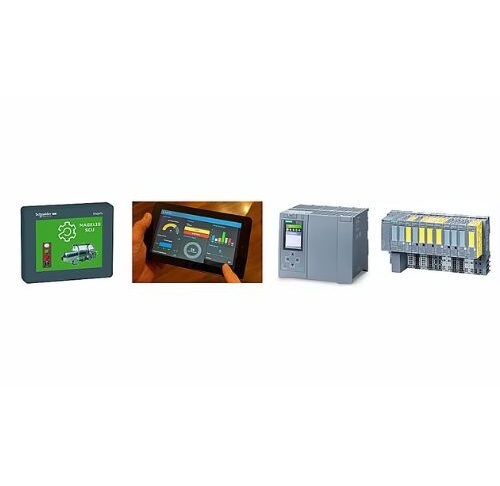
• Programmable Logic Controllers (PLCs), Supervisory Control and Data Acquisition (SCADAs)
• Robotics
• Data Analytics
• Cloud Computing
• Machine Learning and Artificial Intelligence (AI)-based Process Monitoring
An effective Industrial automation solution provider assists manufacturers in developing and implementing Industry 4.0 solutions in their facilities in a manner that minimizes disruption to their normal day-to-day operations.
Why Do Companies Need All-Inclusive Automation Solutions?
Companies typically fail at integrating their new machinery because they do not consider the integration process. There is a difference between automation hardware and true automation strategy. Strategy and System Design, Execution and long term support are included in the definition of true automation.
An experienced Industrial automation solution provider provides services across all phases of automation in addition to the hardware, including:
1. Design and plan the system.
- Process Analysis.
- Needs assessment.
- Making Customized Automation Architecture.
- Energy Efficient System Designs.
2. Engineering and Integration.
- PLCs programming.
- SCADA Systems Are Under Development.
- Creating User Interfaces
- Control panels manufacturing.
- Incorporating Robots.
3. Setting Up and Starting Up
- Executing On-Site.
- System Test.
- Improving Efficiency.
4. Post sale service and AMC.
- Maintenance Contract Offerings
- Assistance in Resolving Problems
- System Enhancement.
- Overseeing the System from Afar.
Having a comprehensive justification approach to automation ensures smooth running of the facility and long-term ROI.
Advantages of Collaborating with a Trustworthy Automation Partner
Organizations opting for a well-known Industrial automation solution provider witness measurable results, including.
Bigger Productivity.
Automatic system works quickly and accurately compared to manual system.
Upgraded Standard.
Smart sensors and control systems minimize human errors while ensuring uniform quality throughout the production process.
Lowered Working Costs.
Systems that are engineered to use energy as efficiently as possible and produce optimally reduce waste and downtime.
On The Spot Observations
Production managers can use the dashboard to see all machine statuses, production levels and performance measures.
Proactive Servicing.
Data analysis helps to detect the failure prior to the failure.
Industries Which Benefit from Automation
Automation is transforming many different types of industries, including:
• Manufacturing
• Food & Beverage
• Pharmaceuticals
• Automotive
• Packaging
• Textiles
• Energy & Utilities
Every type of industry has unique requirements and therefore every type of industry requires a customized solution. An experienced Industrial automation solution provider has a solid understanding of the specific industry-related obstacles of every type of industry and develops an automation plan that addresses the unique needs of that particular type of industry.
Role of AI and Smart Data in Modern Automation
The role of artificial intelligence (AI) is revolutionizing the way that businesses operate. Modern automation systems generate vast amounts of production data. AI-based analytical tools review this data in order to:
• Improve the operating efficiency of machines
• Predict when equipment will fail
• Optimize the supply chain
• Reduce unplanned downtime
An experienced Industrial automation solution provider is able to incorporate AI-based analytical capabilities into modern automation systems in order to allow businesses to remain competitive in the increasingly digital world.
Customized Solutions for Every Company Type
Not only are large-scale industrial operations benefiting from the power of automation. Smaller-sized businesses and medium-sized businesses can also gain from automating their operations.
Automation solutions can include:
• Semi-Automated Systems
• Fully Automated Production Lines
• Retrofitting automation onto older equipment
• Scalable smart monitoring systems
An experienced Industrial automation solution provider is able to create solutions that meet your company’s budget, production goals, and planned expansions.
Emerging Trends in Industrial Automation (Beyond 2026)
In order to remain competitive, all businesses must keep up to date with the latest trends in automation.
Some of the emerging trends that businesses should watch out for include:
• Digital Twins for Real Time Simulation
• Edge Computing for Faster Processing
• Cloud-Based Production Analytics
• Cyber-Secure Automation Networks
• Collaborative Robots (Cobots)
• Remote Plant Management
Partnership with an experienced Industrial automation solution provider will enable your company to transition seamlessly into future-ready technologies.
How Automation Can Help Grow Your Business
Automation is not simply about machines, it is about growing your business.
Automation enables businesses to:
• Deliver customer orders faster
• Produce products with consistent quality
• Enter international markets
• Meet regulatory requirements
• Scale-up their operations with confidence
When your systems are operating efficiently, your leadership team can focus on business strategy, innovation, and expanding your business.
Commonly Asked Questions – Solutions for Industrial Automation
1. What is the role of an industrial automation solution provider?
An industrial automation solution provider is a company that designs, installs, and maintains automated systems.
2. Are small-scale businesses barred from automation?
You can customize the automation as per your budget. Even minor upgrades, like PLC changes or monitoring systems, can deliver a strong ROI.
3. How much time does it take to do automation?
The complexity determines the timeline of a project. Minor improvements can take a week or two while complete plant automation can take months.
4. Does automation decrease human workforce?
By automating repetitive manual jobs we are creating bigger demand for technical roles It enhances efficiency instead of removing jobs.