


In today’s fast-paced industrial environment, it is a matter of great significance to have accuracy, rapidity, and dependability. Today, no one expects a machine to merely function – one must function flawlessly. This is where the AC Servo Motor Control System enters the fray. This is essentially the driving force behind precise motions, where simple electrical instructions are converted into smooth, precise, and repetitive motions. This silent assistor is behind making modern technology function smoothly in every field, ranging from automated factories to robots.
What is an AC Servo Motor Control System?
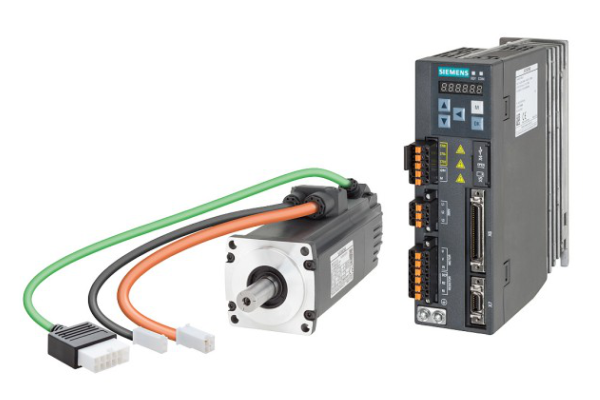
Essentially, an AC Servo Motor Control System consists of a Servo Motor, a Servo Drive, and a Feedback Device. These work in collaboration to ensure that a given motor always acts according to the commands given to it – not an inch more, not an inch less. In contrast to the typical motor that turns when energy is supplied to it, the servo system responds to commands pertaining to position, speed, torque, etc.
“There is no actual movement” because what really happens is in the servo drive, where it processes a command signal, amplifies it, and then distributes just the right amount of power to make it move. At the same time, it has encoders providing it with feedback of where it is in actuality.
How the System Works Explained Simply
A way to think about the system is like driving a car with a navigation system. You put in the place you want to go to, and the navigation system continuously monitors your position. The system will make changes if the position changes. In a similar process, the servo control system continuously checks the position of the motor.
The following is the general procedure involved:
- The controller transmits a command signal.
- The servo motor receives the signal.
- The power is supplied to the motor.
- The motor moves.
- It receives confirmation regarding the movement through feedback.
This closed system is what allows this system to be so reliable and accurate.
Key Comoponents Explained Simply
Servo Motor
This represents the part of the motor that actually moves. AC servo motors are known for their efficiency, quick response times, and smooth motion.
Servo Drive
It has also been described as the “magician of motor control,” acting to translate the low power command signal to usable motor power with the accompanying precision.
Feedback Device
The encoders and/or resolvers provide position, speed, and rotary measurements, which ensure the motor is on track.
These two parts combine to offer a comprehensive motion control solution.
Why Industries Prefer AC Servo Systems
It is largely adopted in various sectors because of the benefits it presents that cannot be found in conventional motor systems. An AC Servo Motor Control System provides precision even when operating at a higher speed. This makes it best for intricate tasks. It provides great torque control. This makes it possible for the equipment to tackle both light and heavy tasks.
Additionally, the use of AC servo motors is very economical with respect to power consumption. AC servo motors are only active when called upon, making them power-efficient and environmentally friendly.
Common Applications You Use Every Day
You might not realize that you observe Servo Systems every day. Servo Systems are used extensively in manufacturing machines such as cutting, drilling, and packaging. Robotics requires Servos for precise movement of its arms. CNC machines employ Servos to create precise parts.
Industries such as printing, textiles, medical equipment, and food processing also rely on servo systems for the quality and consistency they provide. In all the above fields, the AC Servo Motor Control System performs operations with little or no defects.
Precision, Speed, & Control in One Package
One of the most beneficial things about this system is its capability to simultaneously control three most critical parameters, which are position, velocity, and torque. It is quite difficult to achieve such control with normal motors. Using an AC Servo Motor Control System, machines can be stopped and reversed immediately without sacrificing any accuracy.
This speeds up production while keeping the quality high, pretty much a win-win situation for the manufacturers.
Benefits on the Reliability and Maintenance
It is also known that the servo system possesses a long working life. Because of its efficient working operation, wear and tear are avoided. The present-day servo drive features inbuilt protective mechanisms such as overload detection and temperature monitoring.
This will translate to fewer downtimes and lowered maintenance expenses. Although the cost may be higher when buying such a control system for the first time, the use of an AC Servo Motor Control System will prove to be cost-efficient compared to other systems.
Future of Motion Control Technology
Amidst the increase in automated technology, the need for more intelligent and precise motion systems will increase accordingly. Increased software integration, AI control, and intelligent feedback control systems are expected to lead the future of servo technology.
With more developments, the AC Servo Motor Control System is expected to be even more intelligent, featuring self-tuning and predictive maintenance. This will further improve efficiency, safety, and productivity across industries.
Final Thoughts
In other words, the AC Servo Motor Control System is essentially the foundation for modern motion control solutions. It provides elementary instructions and then carries out flawless movement with unqualified accuracy and consistency. This may be a robot building a product, a machine cutting through metal, and the result, again, is the AC Servo Motor Control System to ensure all actions perform as intended.
With the increasing emphasis from various industries in terms of higher levels of automation and smarter machines, the significance of control systems such as this one using servos will continue to play a very important role. When it comes to precision, quality, and overall worth in the long run, there’s no question that it’s in a class by itself.