


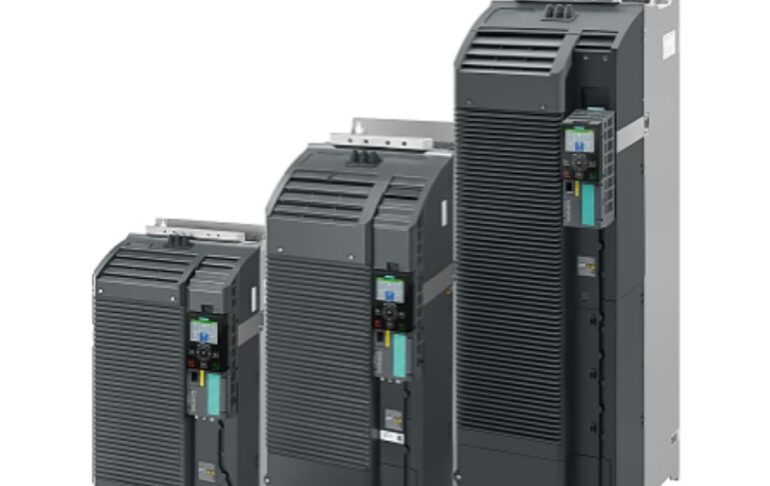
In today’s ever-evolving industrial scenario, efficiency, automation, and energy savings are no longer a need but a requirement for survival and growth. The industrial sector is always on the lookout for smarter solutions that can help them boost productivity without burning a hole in their pockets. One of the most important solutions that are leading this transformation is AC DC Drives.
Explaining AC DC Drives in Simple Terms
Before we move on to the importance of these drives, let’s understand what these drives actually do in simple terms.
When an electric motor is directly connected to a power source, it normally runs at a fixed speed. However, in most industrial applications, the motor needs to run at different speeds depending on the load. This is where AC DC Drives come into play.
These drives control the speed, torque, and performance of motors by controlling the electrical power supplied to the motors. This allows motors to work in a more efficient and safe way.
These drives are like the accelerator of a car, which allows the car to work at different speeds rather than working at full speed all the time.
The Importance of AC DC Drives in Smart Industries
The current trend in industries is shifting towards automation, IoT, and energy-efficient processes. AC DC Drives play an important role in this transition.
1. Accurate Control of Motor Speed
The first major benefit is their capability to control the speed of motors accurately. This results in:
- Smooth running of machines
- Improved quality of products
- Less mechanical wear and tear
Accurate control also results in the reduction of sudden power surges, thereby increasing the life of industrial machines.
2. Huge Energy Savings
Energy savings are the highest priority in 2026, as industries are experiencing increased electricity bills and tougher environmental laws.
AC DC Drives help save huge amounts of energy by ensuring that motors consume only the amount of energy they require.
This results in:
Decreased electricity bills
Less carbon emission
Environment-friendly industrial processes
In fact, many industries have experienced energy savings of up to 40% after installing drive systems.
3. Extended Equipment Life
Frequent start and stop operations and rapid acceleration and deceleration can cause motor damage.
By ensuring smooth acceleration and deceleration, AC DC Drives minimize equipment strain.
This leads to:
- Lower maintenance expenses
- Fewer equipment failures
- Increased equipment life
- Enabling Smart Factories
Smart factories depend largely on automation solutions. Drives are essential for seamless machine control.
They can be easily interfaced with:
- PLC systems
- IoT sensors
- Smart control software
This enables industries to:
- Real-time performance tracking
- Optimize production processes
- Prevent unexpected equipment failures
Without AC DC Drives, the concept of industrial automation is impossible to achieve.
Boosting Productivity and Efficiency
Productivity is directly proportional to equipment efficiency.
Drives can boost productivity by:
- Enabling faster process changes
- Minimizing downtime
- Ensuring consistent motor performance
By ensuring smarter motor control, industries can produce more in less time while maintaining quality.
Major Industries Utilizing AC DC Drives
Today, these drive systems are used by almost every major industry.
Factory Sector.
Used in conveyor belts, pumps, and machines, for smooth functioning.
Heating and cooling system.
Helps manage fan speed and airflow efficiently.
Plants for Water Treatment.
Makes sure the system runs smoothly and pumps are controlled accurately.
Sustainable Energy.
Helps in the effective energy conversion of wind and solar energy systems
The rate of adoption of AC DC Drives is on the rise as industries are becoming smarter.
Job in Sustainable Industrial Growth.
Of late, we hear a lot about sustainability, going green, and saving the planet. Many governments and institutions are making efforts to make industries go green.
The role of drive systems in sustainability is as follows –
- Minimize efforts on energy.
- Emission reduction.
- Use of renewable energy.
Thus, drive systems are one of the most important technologies that can be adopted by industries to ensure environmental compliance for sustainable growth.
How Drives Help in Smart Factory Transformation
Smart factories are based on digitalization, predictive maintenance, and intelligent systems.
The latest drives are equipped with:
- Diagnostics
- AI-based monitoring
- Remote control functionality
These modern features help companies in early fault detection, automatic optimization, and minimizing downtime.
These features make AC DC Drives a crucial part of Industry 4.0.
Why Businesses Should Invest in Drive Systems
Investing in modern drive technology has long-term advantages such as:
- Lower operational costs
- Increased productivity
- Improved equipment performance
- Enhanced safety standards
Companies that invest in these systems first will have an edge over others in the changing industrial scenario.
Conclusion
With the increasing trend of smarter and more efficient operations in various industries, the relevance of AC DC Drives is also increasing. These drives are not only motor controllers; they are also facilitators of energy efficiency, automation, sustainability, and productivity.
Whether it is the reduction of power consumption or the use of Industry 4.0 technology, the importance of these drives is vital in shaping the future of industrial development.
Those companies that choose to use this technology will be better equipped to deal with the challenges of the future industrial scenario.
FAQs
1. How do drives contribute to energy savings?
They regulate the power of the motor according to the demand, thus avoiding unnecessary consumption of energy.
2. Can drives be applied to small industries?
Yes, they are very helpful for small as well as large industries.
3. Do drive systems decrease the cost of maintenance?
Yes, they avoid mechanical stress on the motor, thus reducing maintenance.
4. Are AC DC Drives significant in Industry 4.0?
Yes, they are essential for automation and smart factory operations.