


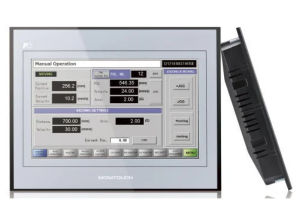
In today’s industries, speed and efficiency are no longer options but necessities: be it manufacturing, automation, building management, or commercial equipment, for all functions, precision and fast decision-making are required. And here comes the HMI Display Panel as one of the most pivotal tools. It acts like a state-of-the-art control hub, giving operators the ability to view, control, and manage processes in real time with just a touch. Simple, clear, and flexible, it has become a necessary device for nearly every industrial and commercial outlet.
The Human Machine Interface, or HMI, integrates humans and machines for the most effortless interaction possible. Businesses today depend on an HMI Display Panel for an intuitively easier experience instead of confusing buttons, unreadable indicators, and difficult manual systems. Much as smartphones revolutionized how people interact with technology, HMIs have similarly altered how operators operate industrial machines and systems.
Why an HMI Display Panel Makes Work Easier
Perhaps one of the major strengths of the HMI Display Panel is that it facilitates even the most complex tasks in an easy manner. Conventionally, controlling industrial machinery required extensive technical knowledge of the operating personnel. Simply put, operators needed to know how to interpret mechanical controls and wiring, complex in nature, coupled with instructions involving many steps. Mistakes were common, and training took quite a long time.
However, with an HMI, everything becomes visual.
These include bright icons, clear graphics, and easy-to-read menus that guide the operator through every step. Parameters, alarms, machine health, and workflow information are provided on a single screen; the operator taps what they need, and the system instantly responds. This reduces confusion, helps speed up decisions, and cuts down on machine downtime drastically.
Another key advantage is safety. Machines can be dangerous if handled wrongly. An HMI Display Panel prevents this through the display of warnings, guiding operators through actions that are safe and keeping certain functions locked until conditions are safe. These features protect the workers and equipment alike.
Boosting Productivity Across Industries
HMIs are employed today in industries ranging from small workshops to large manufacturing plants. Why? Because productivity increases the instant an HMI Display Panel is installed.
HMIs also enable the operators in packaging factories to monitor conveyor speeds, adjust the product counts, and manage machine cycles with just a few taps. The staff in any food processing unit can immediately alter temperatures, set cleaning cycles, and keep track of hygiene parameters. The HMIs will also assist in the monitoring of power usage, the status of solar or generators, and efficiency levels in energy management systems.
Every industry benefits because the HMI Display Panel serves as a bridge between complicated machines and the people who use them. Instead of guessing what the machine needs, everything is clear on the screen for the operator to see-leads to quicker responses, fewer breakdowns, and higher output.
Customization: Based on Your Needs
Other key features of the HMI include the fact that it can be customized for any given application. Screens, buttons, icons, and workflows can be designed based on the operator’s needs. This means a technician in the manufacturing plant may see pressure and temperature charts, while someone in building automation may see lighting zones, lift statuses, or HVAC controls.
This flexibility provides the business with complete control in how systems look and feel. It also cuts down training time since operators only see what’s important to them-nothing extra, nothing confusing.
Besides this, with appropriate programming, the HMI Display Panel can store historical data, performance trends, report generation, and may even connect the systems to the cloud. This would allow managers to study long-term patterns for better decision-making and preventive maintenance scheduling.
The Role of Touchscreen Technology
HMIs take advantage of the familiarity of touchscreens that have become such an everyday part of our lives. When working with an HMI Display Panel, it feels a great deal like using a smartphone or tablet-no steep learning curve here. The gestures are simple: tap, swipe, select, adjust.
This also helps in industries where the staff need quick training: a new operator can learn how to use an HMI within minutes since it is so intuitive. This reduces dependency on technical experts, thus further smoothing workflow across shifts and departments.
Improving Communication Between Humans and Machines
The HMI does not serve any other purpose than to communicate. Machines speak in codes, signals, and data — things humans cannot easily understand. All this information is converted into charts, colors, numbers, and graphics that make perfect sense on the HMI Display Panel, even to a beginner.
For instance:
- A green icon may indicate normal operation.
- A yellow icon can signal caution.
- A red alert can denote some kind of malfunction that needs to be acted upon immediately.
This is a form of visual communication that enables operators to take faster actions with confidence while operating the systems. This further reduces errors from misreading or misunderstanding machine conditions.
Conclusion
The HMI Display Panel has become an indispensable tool for anyone working with industrial or commercial systems. It enhances speed, cuts mistakes, improves safety, and increases productivity. Its simple touch-screen design simplifies the tasks that are complicated in nature, while its customizable features mean businesses can tailor it to meet their needs precisely.